Wholesale Thai Snacks & Food for Export to the Middle East: Halal, Shelf-Life & Customs Guide (2026)
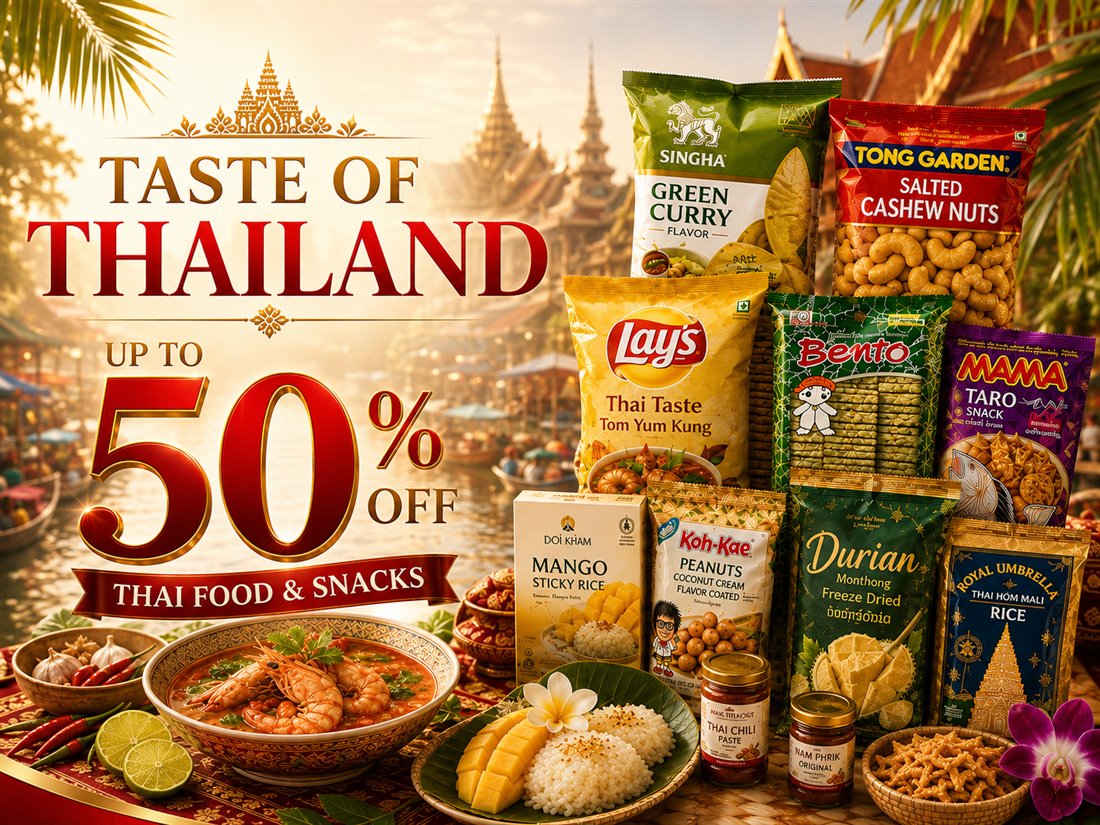
This article is general information for reference.
Thai snacks and packaged food are a popular category in Middle East retail — from dried fruit and coconut chips sold in Riyadh supermarkets to Thai-style rice crackers stocked in Dubai convenience stores. For wholesale buyers in Saudi Arabia, the UAE, Qatar, Kuwait, Oman and Bahrain, sourcing from Thailand can be an attractive option, but food exports carry more compliance weight than cosmetics or home goods. This guide walks through the four areas that matter most before you place a bulk order: halal status, shelf-life, packaging, and customs documentation.
Why Thai Snacks & Food Are in Demand Across the GCC
Thai flavors — tamarind, chili, coconut, tom yum, durian — are well recognized and increasingly stocked alongside local and international snack brands in GCC hypermarkets, e-commerce platforms, and specialty Asian grocery stores. Categories that importers commonly ask about include:
- Dried and freeze-dried fruit — mango, durian, jackfruit, coconut chips
- Rice-based snacks — rice crackers, seaweed-wrapped rice snacks, shrimp chips
- Instant and ready-to-eat food — instant noodles, tom yum paste, curry pastes, sauces
- Coconut products — coconut milk, coconut water, coconut sugar
- Confectionery — coconut candy, tamarind candy, fruit jellies
Before scaling a wholesale Thai snacks or Thai food supplier relationship, buyers should confirm the following four points with the manufacturer or exporter.
Understanding Halal Status for Thai Food Exports
Halal status is the single most important qualifier for food entering GCC markets, and it needs to be checked at the ingredient level, not just the finished-product label.
What Halal Status Means for a Packaged Snack
A product is only genuinely halal-compliant when its entire formulation — including flavorings, emulsifiers, coating agents and processing aids — is free of non-halal animal derivatives and alcohol, and when the factory maintains halal-compliant handling to avoid cross-contact with non-halal lines. Buyers should ask suppliers directly whether a product carries valid halal certification from a recognized Thai halal authority, and request confirmation that the certificate is current and applies to the specific SKU being ordered — certification is typically product-specific and time-limited, not blanket coverage for an entire factory.
Ingredients That Commonly Need Verification
- Gelatin-based binders or coatings (often used in gummy candy and some coated snacks)
- Emulsifiers and glazing agents that may be derived from animal fat
- Alcohol-based flavor extracts or cooking wine used in savory sauces and pastes
- Cross-contact risk when a factory also produces pork- or alcohol-containing products on shared lines
For sensitive categories such as sauces, seasoning pastes and confectionery, it's worth requesting an ingredient breakdown in advance rather than relying on packaging claims alone.
Shelf-Life Considerations for Hot-Climate Markets
GCC ports, warehouses and retail shelves regularly see ambient temperatures well above what many packaged snacks are designed to tolerate. This affects both product selection and inventory planning.
- Choose products with longer natural shelf-life — dried snacks, retort-packed sauces and shelf-stable pastes travel and store better than fresh or chilled items.
- Factor in transit + storage time — sea freight transit time varies by route and schedule (confirm it in the quotation), plus local distribution time before reaching retail; a product with a short shelf-life may already be past its useful selling window by the time it's on shelf.
- Request accelerated shelf-life or stability data from manufacturers for products that will sit in non-climate-controlled storage.
- Avoid moisture-sensitive items in the wettest shipping seasons unless packaging includes a strong moisture barrier.
As a general sourcing rule, prefer products with a generous remaining shelf-life at the time of shipment, and agree the minimum remaining shelf-life with your supplier and your own retail buyers before ordering.
Packaging Standards That Protect Product Quality
Packaging for Middle East export needs to do more than look attractive on a shelf — it needs to survive heat, humidity and long transit times.
- Retort pouches and multi-layer laminated film offer better moisture and oxygen barriers than simple plastic bags, extending real-world shelf-life.
- Nitrogen flushing for fried and fatty snacks (like shrimp chips or coconut chips) reduces oxidation and rancidity risk during long shipping.
- Carton strength and palletization matter for sea freight — reinforced export cartons reduce breakage and crushed-product complaints on arrival.
- Bilingual labeling — many GCC countries require Arabic-language labeling (or Arabic stickers applied before or after import) showing product name, ingredients, net weight, production and expiry dates, and country of origin.
- Clear expiry date formatting is closely checked at GCC customs and retail inspection; buyers should confirm the date format and legibility before shipment.
Customs, Labeling and Documentation Tips
Food imports face closer scrutiny than most other product categories, so documentation should be prepared well ahead of shipment. The points below are general reference only — confirm current requirements with the local authority or a customs broker in your market.
- Confirm the correct HS code for each product category, as duty rates and inspection requirements vary between snack foods, sauces, and confectionery.
- Prepare a full ingredient and nutritional declaration in English (and Arabic where required) for each SKU.
- Halal certification documents should be ready to present to customs and, in many GCC countries, to the relevant food or municipality authority — ask your supplier which specific documents apply to your product before shipment, rather than assuming one certificate covers everything.
- Country-of-origin and expiry-date compliance are commonly checked at the port of entry; mismatched or missing information can cause import delays.
- Import permits and local food registration in the destination country remain the importer's responsibility — requirements differ across Saudi Arabia, the UAE, Qatar, Kuwait, Oman and Bahrain, so it's worth confirming local rules with a customs broker in your own market before the shipment departs.
ThaiNex coordinates shipping from Bangkok. Export documents such as commercial invoices, packing lists, certificates of origin or product specification sheets may be available on request, depending on the product. Final import clearance, permits and local compliance remain the importer's responsibility in their destination country, and we recommend working alongside a local customs broker for country-specific requirements.
Sourcing Smart: What to Ask Before You Order
- Is halal certification current and specific to this SKU, not just the factory in general?
- What is the remaining shelf-life at time of shipment, and how was it tested?
- What packaging format is used, and is it suitable for sea freight and hot-climate storage?
- Can the supplier provide Arabic labeling, or arrange it as part of the OEM/private-label process?
- What order quantity options are available per SKU, and can flavors be mixed within one shipment?
Working through these questions with your Thai snacks or Thai food supplier before the first order helps avoid costly surprises at the port and builds a foundation for a repeatable wholesale relationship.
Looking to import Thai snacks and food wholesale for the Middle East? Register free at thainex.com to view wholesale prices, or send ThaiNex your product list for a wholesale quotation. Halal and export documents may be available on request depending on the product, and we coordinate shipping from Bangkok.